Saturday, November 5, 2011

TB disease, Causes and How to Overcome It

Causes of TB Disease
Tuberculosis is an infectious disease caused by bacteria Mikobakterium tuberculosis. These bacteria are rod-shaped acid-resistant and thus also known as Batang Resistant Acid (BTA). This bacterium was first discovered by Robert Koch on March 24, 1882, to commemorate his services so that the bacteria are given the name of Koch bacillus. In fact, TB disease of the lungs is sometimes referred to as the Koch Pulmonum (KP).

Mode of transmission of TB Disease 
TB disease is usually transmitted through contaminated air with Mikobakterium tuberculosis bacteria that are released at the time of TB patient coughs, and in children the source of infection is generally derived from adult TB patients. These bacteria often enter when and accumulated in the lungs will breed a lot (especially in people with low immune system), and can be spread through blood vessels or lymph nodes. That is why infectious TB can infect virtually all body organs such as lungs, brain, kidney, gastrointestinal tract, bone, lymph nodes, etc., nevertheless organs

When Mikobakterium tuberculosis successfully infect the lungs, it soon will grow colonies of bacteria that form globular (rounded). Usually through a series of immunological reactions TB bacteria will endeavor inhibited through the formation of wall around the bacteria by lung cells. The mechanism of formation of the wall was made of the surrounding tissue into scar tissue and the TB bacteria will become dormant (resting). Dormant forms is what is actually seen as tubercles on the x-ray examination.

In some people with good immune systems, this form will remain dormant throughout his life. Whereas in those with immune systems that are less, these bacteria will have breeding tubercles grow so much. That many of these tubercles form a space inside the lungs. This space that would become the source of production of sputum (phlegm). Someone who has been producing sputum can be estimated is experiencing positive growth and excess tubercles infected with tuberculosis.

Increased transmission of infection has been reported at this time, many linked to several conditions, including worsening socio-economic conditions, not optimal public health service facilities, the increasing number of people who do not have a place to live and the epidemic of HIV infection. Besides a weak body resistance / decreased, and the number of bacteria is a virulence factor that plays an important role in the occurrence of TB infection.

Symptoms of TB DiseaseSymptoms of TB disease can be divided into general symptoms and specific symptoms that arise according to the organ involved. Clinical picture is not very typical, especially in new cases, making it quite difficult to diagnose clinically.
Symptoms of systemic / general
  • Fever is not too high that lasts longer, usually felt at night with night sweats. Sometimes an attack of influenza-like fever and intermittent nature.
  • Decreased appetite and weight.
  • Cough-cough for over 3 weeks (may be accompanied by blood).
  • Feelings of not feeling (malaise), weakness.

Specific symptoms 
  • Depending on which organs are affected, in case of partial bronchial obstruction (the channel leading to the lungs) due to pressure of enlarged lymph nodes, will lead to sound "wheezing" sound accompanied by shortness of breath weakened.
  • If there is dirongga pleural fluid (lung packing), may be accompanied by complaints of chest pain.
  • If the bone, there will be symptoms such as bone infection at some point be able to form channels and lead to the overlying skin, in this estuary will discharge pus.
  • In children can affect the brain (wrapping a layer of the brain) and is referred to as meningitis (inflammation of the lining of the brain), the symptoms are high fever, a decrease in consciousness and seizures.

In pediatric patients who do not cause symptoms, TB can be detected if there are known contacts with adult TB patients. Approximately 30-50% of children in contact with adult pulmonary TB patient gives a positive tuberculin test results. In children ages 3 months - 5 years who live with adult pulmonary TB patients with smear-positive, 30% were reported infected based on serological examination / blood.
Enforcement of Diagnosis

If someone is suspected of contracting tuberculosis, then a few things that need to be done to establish the diagnosis are:
  • Anamnesa both to patients and their families.
  • Physical examination.
  • Laboratory tests (blood, sputum, cerebrospinal fluid).
  • Examination of anatomic pathology (PA).
  • X-ray chest (thorax photo).
  • Tuberculin test.

Treatment of TB Disease.TB treatment takes longer than treating other types of bacterial infections. If infected with TB, patients should take antibiotics for at least six to nine months. Proper treatment of tuberculosis disease and duration of treatment depends on your age, overall health, drug resistance, type of tuberculosis (latent or active) and its location in the body.

The immune system (defense) can fight the infection and stop the spread of bacteria. The immune system eventually by forming scar tissue surrounding the tuberculosis bacterium, and isolating the entire body. Tuberculosis that occurs after initial exposure of bacteria is often called primary tuberculosis. If the body is able to form scar tissue (fibrosis) around the TB bacteria, the infection is contained in an inactive state. Such individuals usually have no symptoms of tuberculosis and can not spread TB to others.

If a person is infected with latent tuberculosis, may need to take only one medication for the treatment of tuberculosis. Active tuberculosis, especially if it is drug-resistant strain (resistant), would require several drugs at once. The most common drug used to treat tuberculosis, among others, Isoniazid, Rifampin (Rifadin, Rimactane), Ethambutol (Myambutol), and Pyrazinamide.
Side Effects TB Treatment

Tuberculosis treatment side effects are not common but can be serious when it occurs. All TB drugs can be highly toxic to the liver especially people with symptoms of tuberculosis are also accompanied with liver complications (remember that the liver serves to neutralize toxins in the body). It gives a picture that needs a referral or prescription for taking these drugs. Common side effects caused include nausea, vomiting, loss of appetite, yellow skin (jaundice / jaundice), dark urine, fever that lasts three days or more and have no obvious cause.

After several weeks of people who are infected will not be transmitted may begin to feel better. It is important that the complete treatment of tuberculosis in a consistent, therapeutic and consumption of drugs exactly as prescribed by your doctor. Stopping treatment too early or skipping doses can allow the surviving bacteria to become resistant to drugs, leading to an infection that is much more dangerous and difficult to treat. To help people stay consistent, therapeutic treatment directly observed tuberculosis is sometimes recommended. In this approach, a health care worker managing patient medications.

    Friday, November 4, 2011

    10 Benefits of Bananas

    In addition to being a favorite most athletes, bananas also have efficacy for health and beauty. But to get the benefits, you need to carefully choose. Because only a ripe banana alone that can change blood sugar into glucose naturally, and quickly diabsorsi into the bloodstream.

    The characteristics of a ripe banana, banana skin is yellowish green with brown or yellow spots. All content in ripe banana, will provide some health benefits, especially for:

    1. Source of Power
    Bananas can be digested easily, so that the sugar contained therein will be converted into a good power source for the formation of the body, working muscles and also very good for relieving fatigue.

    2. Expectant motherWomen who are pregnant are encouraged to eat bananas, because they contain high folic acid is important for the perfection of the fetus, the formation of new cells and preventing birth defects occur.

    A ripe banana, will contain approximately 85-100 calories. So by eating two bananas fresh, folic acid requirement of approximately 58 micrograms can be met. In addition, the banana will help keep blood sugar levels can reduce morning sickness, so the bananas are good for snacks pregnant women.

    3. Patients with AnemiaThe content of iron is quite high in bananas, can stimulate the production of hemoglobin in the blood for patients with anemia. Two bananas a day, very good for people with anemia.

    4. Ulcer Pain SufferersAs a fruit that can be consumed directly, bananas do not irritate or damage the intestine for ulcer sufferers. The fruit is often used to fight bowel disease, because the texture is soft.

    Bananas are also able to neutralize excess stomach acid and coat the stomach so as to reduce irritation. For those who suffered bowel disease or colic due to stomach acid, you can consume them in a glass of milk mixed in liquid.

    5. Lever Disease PatientsFor patients with liver, two bananas a day with the addition of one tablespoon of honey, it would be good to increase appetite and increase powerful.

    6. Burn PatientsEspecially for people with burns, you can use banana leaves as a treatment. Way, burned skin smeared with a mixture of banana leaf ash and coconut oil. This mixture is able to cool the burned skin.

    7. Experiencing StressBananas contain potassium, which is a vital mineral which helps normalize the heartbeat, sends oxygen to the brain and regulates the balance of water levels in the body. When experiencing stress, your metabolism will increase dramatically, thereby reducing the body's potassium levels. With bananas, potassium levels in the body will be balanced.

    8. Stroke PatientsBased on the research of The New England Journal of Medicine, eating bananas every day will reduce the risk of death from stroke by 40%.

    9. Controlling TemperatureIn some countries, bananas are regarded as cooling foods that can reduce the physical and emotional temperature of expectant mothers. In Thailand for example, pregnant women eat bananas to ensure the baby is born with a cool temperature.

    10. Increase Brain PowerIn an English school, 200 students able to complete the final exam with just a breakfast of bananas. They also often eat bananas during recess and lunch, because bananas can boost brain power.

    Soursop for Health Benefits

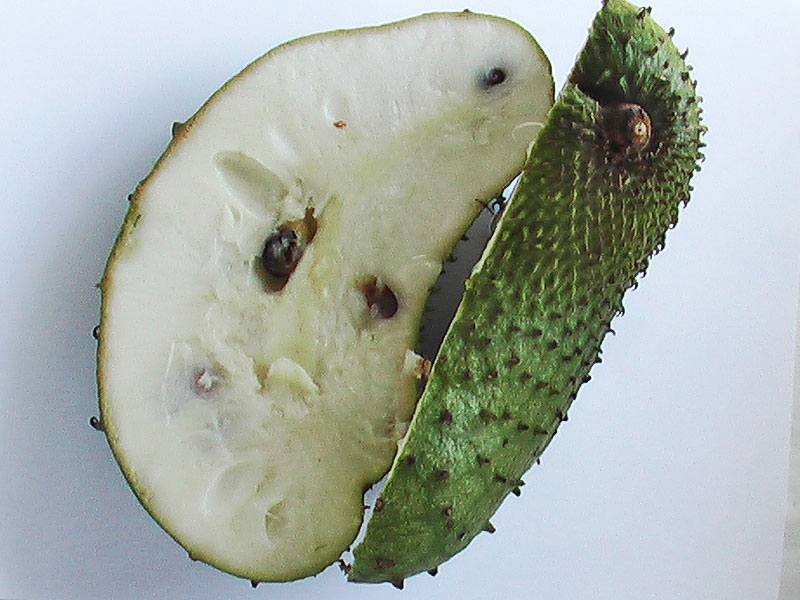
    Soursop for Health Benefits - The following description of nutrient content and usability of fruit, flowers and seeds of soursop / tailings to health, especially for the treatment of cancer, hemorrhoids, liver disease, ulcers, eczema, rheumatism, lumbago.

    Other names: Soursop (UK), corossol or Anone (France), Zuurzak (Netherlands) Guanabana (Spanish), graviola (Portuguese), Brazilian Paw Paw, Corossolier, Guanavana, toge-Banreisi, Bengal Durian, Jackfruit Blanda, and Jackfruit Londa .

    Nutrient Content of soursop fruit is as follows:
    Soursop fruit consists of 67.5 percent pulp, 20 percent of the fruit skin, fruit seeds 8.5 percent and 4 percent of the core pieces.
    After water, the highest content of nutrients in the soursop is carbohydrates. One type of carbohydrate on soursop fruit is a reducing sugar (glucose and fructose) with levels of 81.9 to 93.6 percent of the total sugar content.
    Soursop fruit contains very little fat (0.3 g/100 g), so it is good for health. Sour taste in soursop derived from non-volatile organic acids, mainly malic acid, citric acid, and acid isositrat.

    Vitamins are the most dominant in the soursop fruit is vitamin C, which is about 20 mg per 100 grams of fruit flesh. Requirement of vitamin C per person per day (ie 60 mg), can be met only by consuming 300 grams of meat soursop fruit. The content of vitamin C is high enough on the soursop is an excellent antioxidant to boost the immune system and slow the aging process (stay young).
    Dominant minerals are phosphorus and calcium, respectively by 27 and 14 mg/100 g. Both minerals are essential for the formation of bone mass, making it useful to form strong bones and prevent osteoporosis.

    In addition to nutritional components, soursop fruit is also very rich in non-nutritional components. One of them is a lot of fiber-containing food (dietary fiber), which reached 3.3 g / 100 g of fruit flesh.
    Consumption of 100 g of fruit flesh can meet 13 percent of food needs of fiber a day. Soursop fruit is a fruit that is rich in phytochemical compounds, so as to ensure that the fruits are very much beneficial for health.
    Phytochemical compounds are likely to have health giving properties, although not all scientifically proven. Range of benefits for therapy, among others, soursop treatment of gallstones, antisembelit, uric acid, and increased appetite. In addition, the fiber content also serves to facilitate digestion, especially for the treatment of constipation (hard bowel movements).
    Fruit juice (juice) soursop in the digestive system

    Studies at Purdue University show that graviola leaf can kill cancer cells effectively, particularly cancer cells: prostate, pancreas, and lungs.

    The results of some of the university's research to prove if the magic tree and its fruit can be:

    1. Attacking cancer cells with naturally safe and effective, without nausea, weight loss, hair loss, as happened in chemo therapy. 
    2. Protecting the immune system and prevent deadly infections. 
    3. Increased energy and improved physical appearance. 
    4. Effectively selecting a target and kill the bad cells from 12 different types of cancer, including colon, breast, prostate, lung, and pancreas. 
    5. Power works 10,000 times stronger in slowing the growth of cancer cells compared with adriamycin and chemo therapy is commonly used. 
    6. Unlike chemo therapy, this juice is only selectively hunt down and kill the bad cells and not harm or kill healthy cells.


    Traditional prescription medicine with the following soursop
    • Treatment of Cancer. - 10 that old soursop leaves boiled in 3 cups of water until the remaining 1 cup, drink 2 times per day for 2 weeks. Soursop leaves are said to nature such as chemotherapy, even more remarkable because soursop leaves only kill cells that grow abnormally and allow cells to grow normally. 
    • Pain. 20 soursop leaves, boiled with 5 cups water to boiling until tinggal3 glasses, drink 1 a day 3 / 4 cup. 
    • Infant Diarrhoea. Soursop fruit is ripe. Soursop fruit is squeezed and filtered to take water, drenched diarrhea in infants as much as 2-3 tablespoons. 
    • Hemorrhoid. Soursop fruit is ripe. Squeeze to take water as much as 1 cup, and drink 2 times a day, morning and afternoon. 
    • Boils. Soursop leaves are still young enough, stick it in a place exposed to ulcers. 
    • Anyang-anyangen (Urinary Tract Infection).Half-ripe soursop and sugar to taste. Soursop peeled and boiled with sugar with 2 cups of water, filtered and drunk. 
    • Urine Bladder Pain. Half-ripe soursop fruit, sugar and salt to taste. All material is cooked compote made. Eaten plain, and performed regularly every day for 1 week in a row. 
    • Liver disease. Another fast food, only drink soursop juice for 1 week 
    • Eczema and Rheumatism. Mash until smooth soursop leaves and apply on the affected part 
    • Soursop flowers can be used to cure cataracts but how do I use belom tau. If I've got the recipe I will add here.

    Thursday, November 3, 2011

    Does High Circulating Insulin Drive Body Fat Accumulation? Answers from Genetically Modified Mice

    The house mouse Mus musculus is an incredible research tool in the biomedical sciences, due to its ease of care and its ability to be genetically manipulated. Although mice aren't humans, they resemble us closely in many ways, including how insulin signaling works. Genetic manipulation of mice allows researchers to identify biological mechanisms and cause-effect relationships in a very precise manner. One way of doing this is to create "knockout" mice that lack a specific gene, in an attempt to determine that gene's importance in a particular process. Another way is to create transgenic mice that express a gene of interest, often modified in some way. A third method is to use an extraordinary (but now common) tool called "Cre-lox" recombination (1), which allows us to delete or add a single gene in a specific tissue or cell type.

    Studying the relationship between obesity and insulin resistance is challenging, because the two typically travel together, confounding efforts to determine which is the cause and which is the effect of the other (or neither). Some have proposed the hypothesis that high levels of circulating insulin promote body fat accumulation*. To truly address this question, we need to consider targeted experiments that increase circulating insulin over long periods of time without altering a number of other factors throughout the body. This is where mice come in. Scientists are able to perform precise genetic interventions in mice that increase circulating insulin over a long period of time. These mice should gain fat mass if the hypothesis is correct.

    Read more �

    Benefits of Drinking Milk To Lower Risk of Breast Cancer

     Benefits of milk had no doubt. Halfway all the nutrients contained leadership milk is gratifying quality. Protein and milk fat has a formidable properties. Vitamins and minerals, milk is relatively unreduced.

     Milk encumbrance serve as flagging control heterogeneous forms. Acknowledged ' s not anything fresh or pure embodiment, commensurate now powdered milk or pithy milk. Humans are and consuming milk from milk - containing subsistence goods, alike thanks to cheese, cool cream, and yogurt.

     However, crackerjack are still differences of presumption about the consumption of this milk. No clump has claimed that the consumption of milk every tour is not gratifying for health, especially vascular diseases equivalent because narrowing of redness vessels. The argument is, milk intensification damask cholesterol levels develop into a risk fixin's for feelings malady. Secondly, well-qualified is a firm analogy between average milk production per capita suppress deaths from passion ailment money some countries.

     Other groups supporting the role of milk at a penniless risk of different degenerative diseases, compatible emotions disorder, hypertension, and cancer. Recent studies guidance Norway to underpinning irrefutable.

     Hjart�ker stash colleagues from the Institute of Community Medicine, University of Tromso, Norway, wound up its newspaper leadership the International Chronicle of Cancer, showed that the vittles of three or heavier glasses of milk each trick may lower breast cancer risk in women pramenopause.

     Through the study cohort the Norwegian Women and Cancer Study, they examined 48 844 women for six years and two months. Milk consumption was measured with a history of food consumption submitting to the respondents. During this period, the team found 317 cases Hjart�ker breast cancer patients.

     It turned out that the consumption of milk since childhood negatively associated with the incidence of breast cancer when they were aged 34 - 39 years ( pramenopause ). That means that the consumption of milk since childhood can reduce the risk of developing breast cancer.

     Milk consumption in adulthood also reduces the risk of breast cancer after corrected by hormonal factors, body mass index, physical activity, and alcohol consumption. Women who do not consume milk run the risk of breast cancer two times greater than women who consumed three glasses of milk or more of milk every day.

    Foods For Eyes Healthy

    Foods For Eyes Healthy - Eyes are the five senses are very important / essential. Conceivably, if we experience eye damage or blindness, we can not enjoy and feel how beautiful this universe. In fact we often forget to make eye care, although, as well as other parts of the body, the eyes may be affected by disorders or health problems. Disorder-disorder can be caused by air is not clean or polluted, solar radiation, radiation from too long in front of computers, and other disturbances.

    Studies conducted by the Eye Disease Prevalence Research Group (2004) estimates that by 2020 the number of people with eye disease and blindness in the world will reach 55 million inhabitants. The study also mentions that the eye disease and blindness will increase, especially for those who have aged over 65 years. A person aged 80 years or over who is 8% of the total population, suffered blindness as much as 69%.

    Health problems in a common eye problem is the decline in the function of vision, red eye symptoms without any decrease in visual function, and red eyes with decreased visual function. Until now, eye disease that affects many are cataracts, glaucoma, and infection.

    Along with increased attention and knowledge of the influence of nutrition on health, especially the health of the eye causes the rapid market growth of eye health products. Most of the products for eye health supplements that are marketed now shaped. In addition to antioxidant compounds (vitamins A, C, and E) that has previously been known to improve eye health, other compounds such as lutein, zeaxanthin, and astaxanthin, recently known as a compound that can improve eye health.

    Lutein, a yellow carotenoid family of compounds found in many green vegetables. Lutein in the macula and are believed to protect the eyes from oxidative damage by ultraviolet irradiation (UV).

    Macula was in the midst of the retina and directly adjacent to the lens of the eye. Macula is a small area that contains millions of cells that help produce sharp eyesight to read or see objects clearly.

    Other carotenoid compounds present in the macula is is zeaxanthin, which are known to provide benefits for eye health.

    Research conducted by Chitchumroonchokchai and colleagues in 2004 from Ohio State University, showed that lutein and zeaxanthin may protect the human lens cells from UV exposure, which is a major cause of cataract disease. In addition, they compared the antioxidant activity of lutein and zeaxanthin as vitamin E. The results indicate that lutein and zeaxanthin showed 10 times higher activity than vitamin E in protecting the lens cells from damage caused by ultraviolet light.

    In the same year was also conducted research by Neuringer and colleagues, showed the ability of lutein and zeaxanthin in improving eye health. While testing on animals, sponsored by DSM Nutritional Products Switzerland, showed that supplementation or the addition of lutein and zeaxanthin increase the activity of antioxidants in the blood.

    Group of other carotenoid compounds that actually has the ability to protect the macula from UV exposure is astaxanthin. Guerin et al. (2003) mentions that the ability of antioxidants and anti-inflammatory compounds astaxanthin can give the effect of eye protection from UV rays.

    Until now, the antioxidant activity of the compounds lutein, zeaxanthin, and astaxanthin mechanism to respond to an increase in eye health. Free radicals derived from UV light or air contamination, into the eye resulted in the oxidation reaction of molecules susceptible to the lens of the eye.

    These molecules are proteins and fats that make up the lens of the eye. The effect of this oxidation causes damage to the protein or fat in the eye lens. Along with increasing age and increasing accumulation of free radical stress, proteins and fats that are damaged will be greater in number. That's what makes vision blurred and gradually became blind.

    Lutein, zeaxanthin, and astaxanthin nab free radicals (radical scavenger activity) by binding with it before the radical-radical damage to the eye lens protein or fat. Or in other words lutein, zeaxanthin, and astaxanthin may be cited as the eye lens protector against free radical attack.

    Carotenoids are found in yellow-orange vegetables like carrots, green vegetables like broccoli, and red fruits and yellow-orange, like tomatoes, strawberries, watermelon, and mango. So by eating vegetables and fruits on a regular basis to meet the needs of lutein, zeaxanthin, and astaxanthin per day. Besides other effects of consuming vegetables and fruits is to increase the intake of dietary fiber which is very good for health.

    Tuesday, November 1, 2011

    Required Nutrients For Pregnant and Lactating

    To produce healthy and intelligent children, mothers should pay attention to diet during pregnancy, as well as breastfeeding. Note the nutrients contained in food consumed.

    The following essential nutrients needed for pregnant and lactating mothers health and infant growth and development:
    1. Protein is a builder substances needed for growth of cells in the fetus / infant. Contained in animal food sources such as meat, fish, milk and eggs.
    2. Folic Acid (Folic Acid), including B vitamins are useful in the formation of DNA, red blood cells and the development of the nervous system. There is the source of green food such as spinach and broccoli, fruits such as oranges, strawberries, pineapple, avocado and beef, corn, crab, mackerel and nuts.
    3. Calcium is useful for the growth of bones, teeth and soft tissue in the baby / fetus. And prevent bone loss in the mother. Can be obtained from milk, eggs, cheese, anchovy, salmon, sardines, green leafy vegetables, sesame, beans and fruits.
    4. Iron is important in the formation of hemoglobin (Hb) which is a component in blood that carries oxygen to the placenta. Also beneficial for endurance in the mother, for fetal growth and development and encourage the development of the fetal brain. In order to better absorption of iron, required the presence of vitamin C.Sources of iron found in beef, liver, eggs, cereals, nuts and green vegetables. There is also in the form of supplements available in pharmacies and health service venues.
    5. Choline is an essential nutrient that the body will be broken down into phosphatidyl choline is an essential part of the brain cell membranes and neurotransmitter involved in the control muscle movement (motor movement), memory and other body functions. To fulfill it is recommended to drink mother's milk for pregnant or nursing mothers containing choline.
    6. AA (arachidonic acid) and DHA (docosahexaenoic) is a component of essential fatty acids found in the brain. Function is important for neurological development in fetuses / infants, especially the formation of brain tissue and the interconnection between nerves in the brain. In addition to function also in the development of the organ of vision and growth of body tissues. can be obtained from oily fish (salmon, tuna, lemuru), soybean oil, olive oil, corn oil, seed oil sun and can also be obtained by consuming special milk pregnant or lactating.
    7. Vitamins essential for the formation of new cells, such as:
      • Vitamins, B1, B2 and B3 which serves for the formation of energy.
      • Vitamin B6 helps the protein to form new cells and suppress nausea in pregnancy
      • Vitamin B12 helps make red blood cells
      • Vitamin C to boost the immune system and helps absorption of iron.
      • Vitamin D helps the absorption of calcium
      • Vitamin A to prevent myopia. But there are opinions that say, too much vitamin A during pregnancy can cause defects in the fetus.